
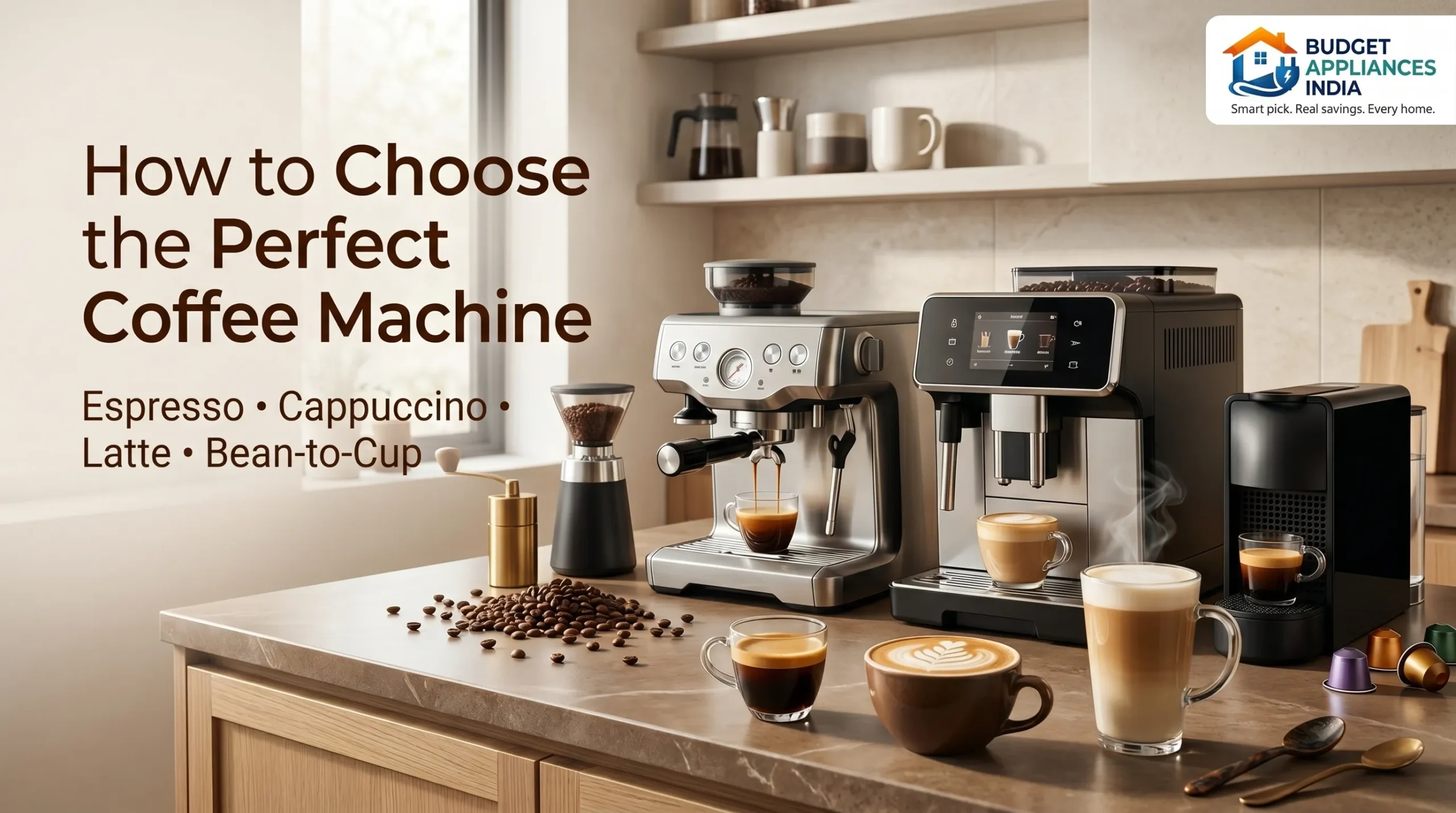
From Espresso to Cappuccino: How to Choose the Right Coffee Machine
Many coffee lovers dream of waking up to the rich, velvety aroma of café-style espresso, lattes, or cappuccinos right in their own kitchens. However, stepping into the world of home brewing equipment can quickly become overwhelming. Between traditional drip brewers, high-pressure semi-automatic espresso machines, sleek pod systems, and ultra-luxurious bean-to-cup models, the sheer volume of options can leave buyers confused by technical jargon like thermoblocks, PID controllers, and pump bars.
Choosing the perfect coffee setup isn’t about buying the most expensive appliance on the shelf; it is about finding the machine that aligns with your specific beverage preferences, daily routine, household size, and maintenance expectations. This complete educational Coffee Machine Buying Guide breaks down the internal mechanics, practical pros and cons, and real-world costs of each category to help you discover the best coffee machine for home use.
📋 What’s Inside This Guide
- Espresso Machine vs Coffee Maker: The Core Technology
- Types of Coffee Machines Explained
- How to Choose Based on Your Beverage Preferences
- Key Coffee Machine Features Explained
- Maintenance Guide & Ownership Costs
- Quick Buying Recommendations
- Electricity Consumption & Running Costs
- Common Problems & Maintenance Tips
- Bottom Line: Which Machine Matches Your Morning?
- Frequently Asked Questions
☕ 1. Espresso Machine vs Coffee Maker: Understanding the Core Technology
Before analyzing specific models, it is essential to understand the fundamental difference between a traditional drip coffee maker and an espresso machine.
The Two Core Technologies Explained
- Drip Coffee Makers: These appliances rely on gravity. Hot water is distributed over a bed of ground coffee in a filter basket, slowly dripping through into a carafe. The result is a clean, thin-bodied black coffee or Americano style, ideal for drinking in larger volumes.
- Espresso Machines: These systems use active pressure. A motorized pump forces hot water through a tightly packed, finely ground “puck” of coffee at high pressure. This concentrated extraction process produces a thick, full-bodied shot of espresso topped with a golden, aromatic layer of foam known as crema. An authentic espresso serves as the essential base for specialty milk drinks like lattes, cappuccinos, and flat whites.
🏠 2. Types of Coffee Machines Explained
Every brewing system handles extraction differently, impacting flavor profile, counter space, preparation speed, and clean-up time. Here is an in-depth breakdown of the five primary machine categories.
Drip Coffee Makers
Gravity-fed brewers for large batches of clean black coffee. Lowest cost, zero learning curve.
Semi-Automatic Espresso
Pump-driven machines where you grind, tamp, and extract manually. Full barista-level control.
Bean-to-Cup (Super-Automatic)
One-touch machines that grind, tamp, extract, and froth autonomously from whole beans.
Capsule / Pod Systems
Pre-portioned pods for instant espresso. Lowest entry price; highest per-cup running cost.
Manual Brewers
Moka Pot, French Press, Pour-Over. No electricity needed; highly portable and economical.
Which Type Is Right for You?
Focus on your actual drink preferences first. If you mainly drink plain black coffee in large mugs, a drip machine is the smart buy. If you want espresso-based drinks daily, look at semi-automatics or fully automatics. Only pay for the complexity you will genuinely use every single morning.
A. Drip Coffee Makers
Full Breakdown: Drip Coffee Makers
Coffee Styles It Can Make: Large pots of classic black coffee and Americanos.
Ease of Use: Exceptionally high. Simply add a paper or mesh filter, scoop in ground coffee, fill the reservoir, and press a button.
Maintenance Requirements: Very low. Requires washing the glass or thermal carafe daily and performing a basic monthly vinegar or descaling flush to clear hard water deposits.
Typical Price Range: Budget-friendly. This is the most affordable automated category on the market.
Ideal User Profile: Busy households, remote workers, or offices where multiple people want to drink several mugs of black coffee throughout the day without resetting the machine for individual servings.
B. Semi-Automatic Espresso Machines
Full Breakdown: Semi-Automatic Espresso Machines
Coffee Styles It Can Make: Authentic Espresso, ristrettos, Americanos, and premium milk-based drinks like Cappuccinos, Lattes, and Flat Whites (using an attached steam wand).
Ease of Use: Moderate learning curve. The user is responsible for grinding beans, measuring the dose, tamping the coffee evenly into a portafilter basket, and manually texturing the milk. It represents the traditional ritual of home coffee crafting.
Maintenance Requirements: Moderate to high. The portafilter and brew group must be wiped down after every extraction. The steam wand requires immediate purging and wiping down with a damp microfiber cloth to prevent baked-on milk buildup. Deeper chemical backflushing is needed weekly or monthly.
Typical Price Range: Mid-range to high-end premium.
Ideal User Profile: Aspiring home baristas, coffee enthusiasts, and purists who want total tactile control over extraction variables like grind size, water temperature, and milk texture.
C. Bean-to-Cup Machines (Super-Automatic)
Full Breakdown: Bean-to-Cup Machines (Super-Automatic)
Coffee Styles It Can Make: Single-touch Espresso, Cappuccino, Café Latte, Macchiato, Flat White, and Americano.
Ease of Use: Ultimate convenience. An automatic coffee machine guide highlights that these systems integrate a built-in grinder, automated tamping mechanism, and automated milk frother. You touch a digital screen, and the machine delivers a completed beverage from whole beans to a finished cup in under a minute.
Maintenance Requirements: Structured but automated. The machine runs automatic rinse cycles upon startup and shutdown. Users must periodically empty internal coffee grounds bins, wash the removable brewing block, and execute automated descaling cycles when prompted by the system.
Typical Price Range: Premium to ultra-luxury.
Ideal User Profile: Professionals or families who want premium café-quality beverages made from fresh beans every morning, but have zero interest in manual preparation or cleanup.
D. Capsule or Pod Coffee Machines
Full Breakdown: Capsule or Pod Coffee Machines
Coffee Styles It Can Make: Standard Espresso, Lungo, and basic milk drinks (if paired with a standalone electronic milk frother).
Ease of Use: Seamless. Drop a pre-portioned aluminum or plastic capsule into the slot, press a button, and eject the spent pod.
Maintenance Requirements: Extremely low. Simply empty the used capsule container and run a water-only rinse cycle through the spout.
Typical Price Range: Low to moderate initial machine cost; however, it incurs high long-term ownership costs due to the ongoing price premium of proprietary coffee capsules.
Ideal User Profile: Individuals prioritizing absolute speed, zero countertop mess, and complete cup-to-cup flavor consistency over the superior taste of freshly ground whole beans.
E. Manual and Traditional Brewers (Moka Pot, French Press, Pour-Over)
Full Breakdown: Manual and Traditional Brewers
Coffee Styles It Can Make: Dense, concentrated espresso-style extractions (Moka Pot), heavy-bodied immersion coffee (French Press), crisp, clean black coffee (Pour-Over), or rich traditional regional styles (like South Indian Filter Coffee).
Ease of Use: Fully manual. Requires boiling water externally, managing precise brewing times, and mastering specific pouring techniques.
Maintenance Requirements: Low. Simple hand-washing of non-electric stainless steel, ceramic, or glass components. There are no internal boilers or pumps to descale.
Typical Price Range: Highly economical.
Ideal User Profile: Purists on a tight budget who enjoy a slow, mindful brewing ritual or want a travel-friendly configuration that does not rely on electrical outlets.
🎯 3. How to Choose Based on Your Beverage Preferences
To narrow down your options, look first at what actually fills your mug every morning.
If You Mainly Drink Espresso
True espresso requires high pressure to emulsify the oils in coffee beans. Look for a dedicated semi-automatic machine featuring a solid 51mm to 54mm portafilter and precise internal temperature management. Avoid low-cost drip coffee makers or basic steam-driven machines that claim to make espresso but lack the mechanical power to create true pressure-brewed crema.
If You Love Cappuccinos
A classic cappuccino demands a balanced 1:1:1 ratio of espresso, hot milk, and thick, airy milk foam. A cappuccino machine buying guide should emphasize: look for models featuring an efficient steam delivery system. If you prefer an automated workflow, seek a super-automatic bean-to-cup option that draws milk directly from a side container and textures it right into your cup.
If You Prefer Lattes or Flat Whites
Lattes and flat whites require dense, silky, velvety microfoam rather than the stiff, airy foam of a cappuccino. If you want to practice pouring latte art, select a semi-automatic machine equipped with a professional, manual multi-hole steam wand. For automated convenience, ensure your chosen automatic model allows you to fine-tune milk texture and temperature settings through its digital interface.
If You Drink Mostly Black Coffee
If you rarely touch milk or sugar, do not waste money on intricate steam boilers, dual pumps, or automated milk carafes. A high-quality automatic drip machine equipped with a premium showerhead design (for even water distribution) and a vacuum-insulated thermal carafe will keep your coffee hot for hours without scorching the flavor.
If Multiple Family Members Prefer Different Styles
When one person wants an Americano, another demands a cappuccino, and a third wants a flat white, look for a machine that supports user profiles. Premium super-automatic units allow different users to program and save their precise milk volumes, espresso strengths, and temperature configurations for one-touch access.
🔬 4. Key Coffee Machine Features Explained
When comparing models, avoid falling for inflated marketing claims. Focus instead on these core engineering specifications:
The Critical Role of the Grinder
Freshly ground coffee is non-negotiable for superior flavor; coffee beans oxidize and lose their distinct aromatic notes within minutes of being ground.
- Built-in Conical Burr Grinders: Found in bean-to-cup and advanced semi-automatic machines, these save counter space and streamline your workflow. Look for steel or ceramic conical burrs featuring multiple micro-adjustments.
- Standalone Grinders: If your chosen machine lacks an integrated grinder, factor a dedicated burr grinder into your initial setup budget. Blade grinders should be avoided as they slice beans unevenly, leading to inconsistent extractions.
Pump Pressure: Myth vs. Reality
Many entry-level brands advertise a “15-bar” or “20-bar” pump to sound powerful. However, commercial espresso extraction naturally maxes out at 9 to 10 bars of effective brewing pressure. A high pump rating simply means the industrial component can handle stress; what matters is whether the machine utilizes an over-pressure valve (OPV) to regulate and deliver a steady 9 bars directly to your coffee bed.
Milk Frothing Systems
- Manual Steam Wands: Ideal for purists. They allow you to control the exact angle, depth, and temperature to create glossy microfoam suitable for latte art.
- Automatic/Hands-Free Wands: Featured on mid-to-high-tier machines, these allow you to set a desired temperature and texture level, drop the wand into a milk pitcher, and let the machine texturize the milk automatically using internal thermal sensors.
- Integrated Milk Carafes: These snap directly onto the front of fully automatic units, texturing and dispensing milk autonomously before running an automatic steam purge cycle.
Water Capacity and Thermal Systems
Consider your household size when checking water tank volumes. A small tank (under 1 liter) requires frequent refills if you brew multiple milk-based drinks or rinse cycles daily. Furthermore, verify the heating architecture:
- Thermoblocks/ThermoJets: Heat water on demand inside an internal pipe network, achieving brewing temperatures in 3 to 15 seconds. They are fast and energy-efficient but can fluctuate slightly under heavy back-to-back usage.
- Traditional Boilers: Heat a solid reservoir of water all at once. They offer excellent temperature stability but can require 5 to 15 minutes of preheating before your first cup.
🛠️ 5. Coffee Machine Maintenance Guide & Ownership Costs
A coffee machine is an investment that requires consistent care to perform reliably over time. Neglecting maintenance alters the flavor profile of your drinks and shortens the lifespan of internal heating components.
The Threat of Hard Water Scale
Municipal water lines carry dissolved minerals like calcium and magnesium. When water is boiled inside a coffee machine, these minerals solidify, forming a crust known as scale. Left unchecked, scale clogs narrow internal pipes, reduces heating efficiency, and can cause the boiler to fail entirely. Unless your machine features an advanced integrated filtration system (like the Philips AquaClean filter, which extends descaling intervals), you must run a dedicated food-safe descaling cycle using specialized solution every 2 to 3 months.
Power Consumption and Practical Maintenance Tips
Most home espresso and automatic machines draw between 1300W and 1500W during active heating cycles. To minimize electricity costs, look for models featuring programmable auto-off energy-saving timers. Implement these simple habits to keep your machine in top condition:
Always Use Cold Milk
When texturing milk for lattes or cappuccinos, always start with cold liquid straight from the refrigerator. This gives the steam wand enough time to properly incorporate micro-bubbles before the milk hits its maximum temperature.
Purge and Wipe Instantly
The moment you finish steaming milk, run the wand for one second to blow out residual liquid, then immediately wipe down the exterior with a damp microfiber cloth to prevent milk solids from baking onto the steel.
Empty Trays Frequently
Drip trays and internal puck bins collect damp organic material. Clean them regularly to prevent mold growth.
📊 6. Quick Buying Recommendations
Based on comprehensive cross-specifications and aggregated user satisfaction metrics, here are the standout categories for 2026:
| Best For | Recommended Machine | Key Reason | Buy |
|---|---|---|---|
| Espresso Lovers | Breville BES870XL Barista Express | Premium compact semi-automatic powerhouse with a professional 54mm portafilter, ultra-fast 3-second ThermoJet heat-up, and superb temperature consistency. | Check Price |
| Cappuccino Lovers & Families | De’Longhi Magnifica Start | Highly intuitive 3.5-inch color touch interface with customized user profiles, delivering rich espresso balanced with thick, automated cappuccino foam at a single touch. | Check Price |
| Latte Lovers & Enthusiasts | Breville Barista Touch Impress | Integrated grinder with 30 distinct adjustment settings and a hands-free, sensor-driven automatic milk texturing system that creates glossy microfoam perfect for pouring lattes. | Check Price |
| Beginners & Black Coffee Drinkers | Philips Versuni Fully Automatic | Highly reliable, user-friendly entry points into super-automatic brewing with single-button specialty recipes, easy maintenance, and an AquaClean filter that reduces descaling frequencies. | Check Price |
⚡ Electricity Consumption & Running Costs
Most high-performance espresso and bean-to-cup machines are rated between 1,100 and 1,560 watts.
⚡ Understanding Your Coffee Machine’s Energy Use
- Usage Patterns: The highest power draw occurs during the initial heat-up phase and while steaming milk.
- Running Costs: In an Indian metro city, using a super-automatic machine for two drinks a day typically adds between ₹40 to ₹70 to your monthly electricity bill.
- Efficiency: Modern systems like the ThermoJet heat up in just 3 seconds, significantly reducing energy usage compared to older boilers that draw power continuously during a 15-minute warm-up.
- Capsule Costs: While capsule machines have a lower entry price, they carry the highest long-term running costs because individual pods are significantly more expensive than buying whole beans in bulk.
🔧 Common Problems & Maintenance Tips
Regular maintenance is vital, especially given the hard water conditions common in many Indian regions.
| Common Problem | Cause & Preventive Measure |
|---|---|
| Internal Scaling | Hard water minerals clog the heating element. Preventive: Use Filtered or RO water and descale every 2–3 months. |
| Frother Clogging | Dried milk residue blocks steam holes. Action: Wipe the wand and purge with steam immediately after every use. |
| Grinder Jams | Accumulation of oils from dark-roasted beans. Action: Empty the hopper monthly and use grinder cleaning tablets. |
| Sour or Bitter Taste | Sour: Under-extraction (grind is too coarse). Bitter: Over-extraction (grind is too fine). |
✅ Bottom Line: Which Machine Matches Your Morning?
Finding the perfect coffee machine begins by identifying the specific type of coffee you look forward to drinking every morning. A dedicated espresso purist requires an entirely different setup from someone who values the convenience of a single-touch cappuccino or a large batch of hot black coffee. Focus on your actual drink preferences, your desired level of manual involvement, and your willingness to handle daily maintenance rather than buying based on flashy marketing specs or automated features you may never use.